DCTRL Bitcoin Hackerspace Closes After 12 Yrs in Vancouver
What to Know
- DCTRL, Vancouver's legendary Bitcoin hackerspace, is shutting down its downtown basement location after more than 12 years of continuous operation
- Municipal zoning changes are forcing the closure, but organizers confirm a move to a new venue is already in the works
- The hub hosted hundreds of events, attracted over 1,500 registered members, and published 69 recorded talks on YouTube during its run
- Industry icons including Vitalik Buterin, Andreas Antonopoulos, and Erik Voorhees visited the space over the years, cementing its cultural significance
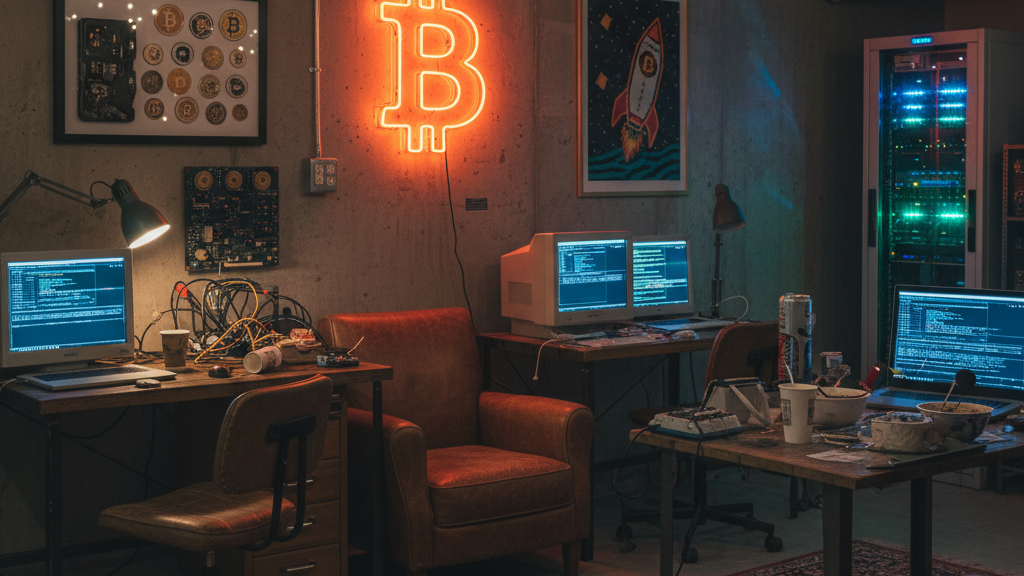
DCTRL, the storied Bitcoin hackerspace nestled in a downtown Vancouver basement, is closing its doors after more than 12 years of uninterrupted operation. The volunteer-run hub, which became a pilgrimage site for crypto pioneers and hardware tinkerers alike, is being displaced by municipal zoning changes that will see a new building erected in its place. However, active members say the community is far from finished, with plans to migrate to a fresh location and overhaul the brand already underway, according to organizers who spoke with reporters. The Vancouver Bitcoin community is renowned for hosting the very first Bitcoin ATM in history, and DCTRL specifically welcomed a who's who of influential figures who helped shape the industry's cultural and innovative identity over the past decade.
How Did DCTRL Begin?
DCTRL is a volunteer-operated Bitcoin community hub and hardware hacking laboratory that grew out of a pivotal moment in cryptocurrency history: the installation of the world's first Bitcoin ATM. The story begins at Waves cafe on Howe Street in Vancouver, where a group known as the Bitcoiniacs, a four-person Bitcoin brokerage still active today, rigged up an ATM to sell bitcoin directly to the public. They rallied the local Vancouver tech, finance, and burgeoning crypto scene and staged a historic launch party in October 2013.
The timing proved electric. Bitcoin had just surged from a handful of dollars to nearly $150, consolidated for several weeks around $100, and was gearing up for a shot at $1,000 per coin. The energy across the Bitcoin community was palpable. This was effectively the end of the longest bear market in Bitcoin's history, and the rising price served as proof to many that the digital currency was here to stay. The launch of a functional Bitcoin ATM, as a result, generated both national and international media coverage, widely regarded as a historic milestone in the adoption of Bitcoin as money.
"The first Bitcoin ATM in the world was a massive event," said Freddie Heartline, a Bitcoin enthusiast and co-founding member of the DCTRL hackerspace, in an exclusive interview. "Oh man, the vibes were incredible. It literally felt like a really good rave. But it was smarter. Way smarter. That's how it all came about, actually," he added, referring to the founding of DCTRL.
Tens of thousands of Canadian dollars' worth of bitcoin changed hands that day and over the following weeks, likely creating several millionaires over the years. The event also spawned copycat ATM projects and even a handful of Bitcoin ATM manufacturing companies. Most importantly for Vancouver's crypto scene, it planted the seed for what would become DCTRL, originally known as Decentral Vancouver.
The first Bitcoin ATM in the world was a massive event. Oh man, the vibes were incredible. It literally felt like a really good rave. But it was smarter. Way smarter.
— Freddie Heartline, Co-founder of DCTRL
From Grimy Basement to Bitcoin Landmark
The idea for a dedicated physical space came from Cameron Gray, another Bitcoin enthusiast who had been volunteering at the Bitcoiniacs' ATM event. According to Heartline, Gray was operating the Bitcoin ATM at Waves cafe when the suggestion emerged organically. "Cam was absolutely an essential part of founding Decentral," Heartline recalled. "He literally turned to me one day, as he was operating the Bitcoin ATM at Waves, after I complained about the lighting at the coffee shop, and said 'we should open a space.' And that was it."
The pair soon secured a basement location in downtown Vancouver. The space was grimy and humid, but undeniably cozy. Over the years, the basement transformed into a genuine hub for Bitcoin engineers, startup founders, crypto enthusiasts, and eventually legends. The decor gradually improved, the leaks were patched, and the walls became adorned with Bitcoin art. Empty corners filled up with hardware of every description, each piece modified to operate or somehow interact with the orange coin. Heartline and Gray were building a lifestyle project of sorts.
When Bitcoin corrected from over $1,000 back down to roughly $300 during the subsequent bear market, keeping the lights on at DCTRL became a serious financial challenge. Heartline's solution was unconventional to say the least: in order to keep the rent paid, he literally moved onto the rooftop of the building, setting up a tent to live in. The scrappy arrangement kept DCTRL alive through one of Bitcoin's most punishing downturns.
As the space persisted, it began attracting the broader local startup community. DCTRL started hosting meetups regularly, and Vancouver's Startup Weekend organizers got wind of the venue. A gentleman known as Greg became a regular visitor, and before long, Startup Weekend events were being staged inside the basement as well, pulling in the wider tech startup scene and establishing DCTRL as far more than just a Bitcoin clubhouse.
The Bepsi Machine: A Symbol of Bitcoin Culture
One of the most iconic artifacts to emerge from DCTRL was the Bepsi machine, a reverse-engineered Pepsi vending machine that became a beloved symbol of the local community. The machine's origin traces back to a $500 donation from Greg, who attached a single creative condition to the gift. "It has to be used for something creative," Heartline recalled Greg saying.
"So I found a Pepsi machine on Craigslist," Heartline continued. "Greg even helped us move the thing in a pickup. Him, me, Cam, and Mike Olaff moved that insanely heavy and awkward thing down the stairs, almost killing Cam." The crew then backwards-engineered the Cold War-era pop machine, hacking it with a Raspberry Pi and considerable ingenuity to accept on-chain Bitcoin transactions. Milliseconds after receiving payment, the machine would dispense a soda. The satisfying clink of a can dropping became a staple sound at DCTRL gatherings, an audible reminder of Bitcoin functioning as everyday money.
A digital version of the Bepsi was eventually built, which fans from around the world used to send donations. Many software iterations took place over time, each rig-wired into the vintage pop machine. Even Vancouver Mayor Ken Sim stopped by to pay homage to this staple of Vancouver hacker culture, this time purchasing a soda from the Bepsi with a Lightning Network payment.
Today, the Bepsi supports virtually every Bitcoin protocol, serving as a testing ground for cutting-edge technology including Taproot Assets, Spark, and Arcade OS. "We even issued our own Bepsi token. One Bepsi equals one soda from the Bepsi machine. It's like a stablecoin, pegged to the price of the pop can," Heartline said. The machine also inspired imitators, such as the 21up vending machine hosted at a nearby blockchain lab called MintGreen. Revenue collected by the Bepsi has gone directly toward supporting the operation of the hackerspace and covering costs. Control over the Bepsi's underlying wallets and tech stack has effectively served as a way to establish rank among the hub's most active members and hosts.
Industry Legends Who Walked Through DCTRL's Doors
Throughout its 12-year run, DCTRL attracted an extraordinary roster of visitors from across the Bitcoin and broader crypto industry. Vitalik Buterin, the founder of Ethereum and a former writer for Bitcoin Magazine, personally visited the space and spent time there during the very early days of Ethereum. A photograph of Buterin alongside Gray, Heartline, and an active member referred to as Kyle still hangs on the wall, a testament to those formative years.
The founders of CaVirtex, Canada's first Bitcoin exchange, were also photographed at the hub. Though the brand is little known today, having been acquired by Kraken years later, CaVirtex held a deep influence on the Canadian Bitcoin scene. The exchange had been selling the coin to Canadians since before the first bull run, which peaked at $30 per coin. Without CaVirtex, many of the prominent Canadian Bitcoiners may never have gotten into the market in the first place.
Virtually, Bitcoin celebrities also attended DCTRL events over the years, answering questions from the local crowd. Notable visitors included Roger Ver before the fork wars, Andreas Antonopoulos, and Willy Woo. Erik Voorhees, who came to fame in Bitcoin for creating ShapeShift, the first major instant crypto-to-crypto swap exchange, participated in a fireside chat at DCTRL during a local meetup.
Even one infamous figure graced the space: Gerald Cotten of QuadrigaCX, a man who was a regular in the Canadian Bitcoin scene during the 2014 era. Cotten was described as a charming and smooth-talking entrepreneur at the time, before his turbulent professional history was revealed and the exchange collapsed in bankruptcy, leaving millions of dollars in user funds unrecoverable. Cotten allegedly died suddenly and mysteriously in India just before the bankruptcy, taking the crypto keys with him, though many personally affected by the centralized exchange collapse remain skeptical of that account.
The Fork Wars and Internal Tensions
DCTRL served as a microcosm of the broader Bitcoin community during some of its most contentious periods. The block size debate, commonly known as the fork wars, tore through the hackerspace just as it divided the global Bitcoin ecosystem. Co-founder Cameron Gray took the big-block side of the argument, resulting in intense debates and ultimately a falling out with the local community and the broader Bitcoin scene.
Gray, nevertheless, is highly respected and appreciated by DCTRL's active members for his contributions to the social fabric of the space. The social scene at the hub inevitably suffered from the same forks and tensions that the Bitcoin protocol went through during that era. DCTRL functioned as an open forum and debate space during those difficult times, even hosting Peter Rizun of the alternative Bitcoin Unlimited implementation, a prominent big-blocker, for a public debate at the venue. The experience further demonstrated how deeply DCTRL's fate was intertwined with the trajectory of the technology it championed.
What Comes Next for DCTRL?
DCTRL is relocating, not shutting down permanently. Active members and hosts have already begun organizing a transition to a new venue, accompanied by a brand refresh and updated vision, according to the hub's organizers. The closure of the downtown basement is the result of the city government rezoning the property, with a new building slated to replace the space that housed over a decade of Bitcoin history.
Over its 12-plus years of continuous operation, DCTRL boasts hundreds of events hosted, more than 1,500 registered community members, and 69 recorded talks published on YouTube. These talks touched on many elements of the Bitcoin and crypto industry. The entire operation was sustained by volunteers throughout this time and financed through public donations and, of course, the Bepsi machine.
According to DJ, one of the active members who prefers to remain pseudonymous, the hub has experienced record attendance in recent months. And while the address will change, its future appears brighter than ever, with active members consolidating the historical moments, relationships, and lessons learned during what may be the longest-running Bitcoin hackerspace experiment in the young industry's history. Those interested in being part of DCTRL's next chapter can follow developments at DCTRL.wtf.
Stay ahead of the market.
Crypto news and analysis delivered every morning. Free.
More from Bitcoinomist
About the Author
Senior Analyst
Kevin Giorgin is an award-winning crypto journalist with over five years of experience covering Bitcoin, DeFi, and blockchain technology at Bitcoinomist.
View all contributors
Follow bitcoinomist.io on Google News to receive the latest news about blockchain, crypto, and web3.
Follow us on Google News