OCC Pitches Stablecoin Rules as Senate Hearing Stars Crypto
What to Know
- OCC released a proposed regulatory framework for stablecoin issuers covering reserves, custody, redemption, and registration under the GENIUS Act
- Federal Reserve Vice Chair Michelle Bowman confirmed the Fed is developing capital and liquidity rules for stablecoin issuers alongside other regulators
- Senator Elizabeth Warren sharply criticized the rapid chartering of Erebor Bank and demanded scrutiny of a banking license tied to World Liberty Financial
- FDIC Chairman Travis Hill said fears of deposit flight from stablecoins have not materialized as U.S. banking deposits continue to grow
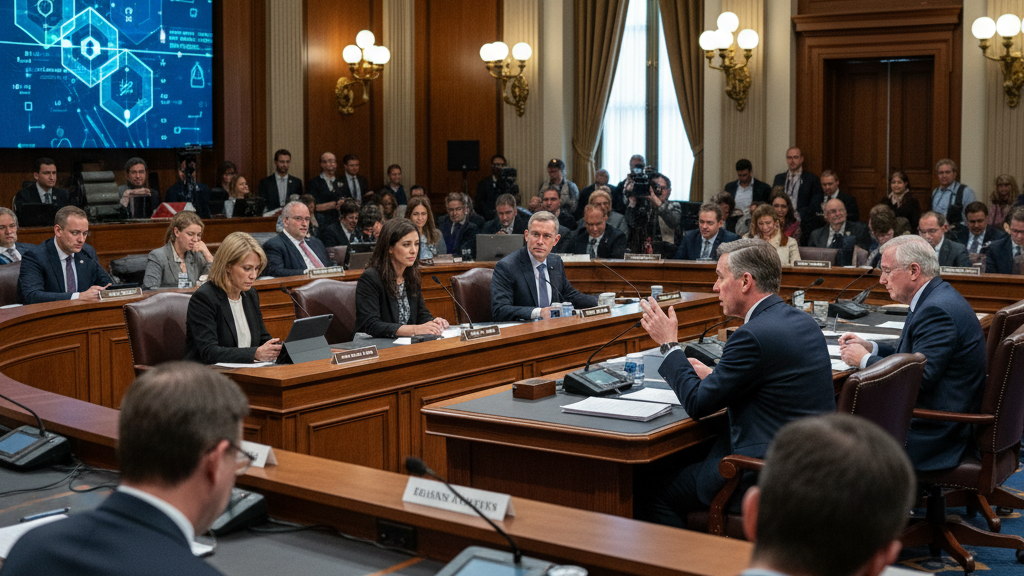
The Office of the Comptroller of the Currency pitched a sweeping set of stablecoin rules on Thursday as the U.S. Senate Banking Committee convened a routine oversight hearing that quickly became a showcase for crypto policy debates. The OCC's proposal, issued on the eve of the hearing, aims to satisfy most of the agency's regulatory obligations under the GENIUS Act, the stablecoin legislation enacted last year, while the Federal Reserve simultaneously signaled its own efforts to bring clarity to digital asset oversight.
OCC Unveils GENIUS Act Stablecoin Framework
The OCC's proposed package would set standards for U.S. stablecoin issuers across several critical areas, including reserve requirements, asset custody procedures, token redemption mechanisms, and the registration process for new businesses. OCC chief Jonathan Gould described the effort as a carefully considered approach to enabling growth in the sector without compromising safety.
"The OCC has given thoughtful consideration to a proposed regulatory framework in which the stablecoin industry can flourish in a safe and sound manner," Gould said in a statement. The agency acknowledged that certain rules related to money-laundering safeguards and sanctions protections still need to be finalized in coordination with the broader Treasury Department.
Federal Reserve Vice Chair for Supervision Michelle Bowman published her prepared testimony ahead of the hearing, opening with a discussion of the GENIUS Act and digital assets. Bowman confirmed that the Fed is "working with the other banking regulators to develop regulations that include capital and liquidity for stablecoin issuers as required by the GENIUS Act." She added that the central bank aims to "provide clarity regarding the treatment of digital assets to ensure that the banking system is well placed to support digital asset activities."
The OCC has given thoughtful consideration to a proposed regulatory framework in which the stablecoin industry can flourish in a safe and sound manner.
— Jonathan Gould, Acting Comptroller of the Currency
What Did Elizabeth Warren Say About Erebor Bank and WLFI?
Senator Elizabeth Warren, the panel's ranking Democrat, used the hearing to press regulators on what she characterized as troubling conflicts of interest. Warren challenged the rapid chartering of Erebor Bank, a technology-focused institution designed to offer digital asset products and services. In a letter sent to regulators, she noted that the bank's backers "have been major donors to President Donald Trump, Vice President Vance, and the GOP."
Warren further pointed out that the attorney who submitted Erebor's charter application was subsequently hired by the OCC as a senior deputy comptroller. She warned that if her inquiry reveals the charter "was not granted in accordance with law and regulation, and instead represented a corrupt political favor to the President's billionaire supporters in Silicon Valley, it would have to be terminated." Warren described the prospective bank as a "financial hub for an interrelated set of Silicon Valley firms owned by these billionaires and their friends."
The senator also demanded that Gould share information about a pending banking license application connected to World Liberty Financial, the crypto venture in which the Trump family maintains partial ownership. Gould pushed back, stating that the OCC would process the WLFI application the same way it handles all applications. "The only political pressure I have felt from any part of the United States government, senator, is from you," Gould told Warren.
Partisan Tensions Over Crypto and Presidential Ties
Warren urged the OCC to reject the World Liberty Financial application outright, warning Gould that approval would transform him from "a cheerleader for President Trump to an accomplice in his corruption." Warren had also referenced reporting on WLFI's potential ownership connections in the United Arab Emirates.
When Democratic Senator Chris Van Hollen pressed Gould on whether the president might act inappropriately or illegally in connection with these banking matters, the OCC chief responded firmly. "If you're suggesting that the president would do anything inappropriate or illegal, then I reject that assertion," Gould stated. Van Hollen replied bluntly: "Oh, I am suggesting that, actually."
The exchange underscored the widening partisan divide over how aggressively U.S. banking agencies should embrace cryptocurrency. For years, federal regulators maintained a cautious posture toward the sector, requiring banks to seek close government approval before engaging with digital assets. The OCC and Fed's current embrace of crypto marks a notable departure from that era of restraint.
How Are Stablecoins Affecting Bank Deposits?
Stablecoins have not caused the deposit flight that banking industry lobbyists have warned about, according to testimony from FDIC Chairman Travis Hill on Thursday. Hill, whose agency was the first to begin advancing GENIUS Act proposals, told lawmakers that banks continue to perform quite well, though he was reluctant to weigh in on the broader legislative debate surrounding the Digital Asset Market Clarity Act.
Committee Chairman Tim Scott reinforced Hill's assessment, citing recent growth in U.S. banking deposits as evidence that stablecoin adoption has not drained traditional financial institutions. "The fear of deposit flight does not seem to be realized, whatsoever," Scott stated. Senator Bernie Moreno, an Ohio Republican who has championed crypto-friendly policies, had specifically asked Hill whether the emerging stablecoin sector posed any threat to bank deposits, prompting the FDIC chairman's reassuring response.
What This Means Going Forward
Thursday's Senate Banking Committee hearing revealed that U.S. regulators are moving swiftly to implement the GENIUS Act's stablecoin provisions, with the OCC, Fed, and FDIC all signaling active rulemaking efforts. However, the sharp partisan clashes over Erebor Bank and World Liberty Financial suggest that political scrutiny of crypto-linked banking applications will intensify in the months ahead. The OCC's proposed framework still requires finalization of anti-money-laundering and sanctions rules with the Treasury Department, meaning the full regulatory picture for stablecoin issuers remains incomplete even as the industry's relationship with traditional banking continues to evolve.
Stay ahead of the market.
Crypto news and analysis delivered every morning. Free.
More from Bitcoinomist
About the Author
Senior Analyst
Kevin covers crypto markets, macro trends, and on-chain data at Bitcoinomist. Former derivatives trader with 8+ years in digital assets.
View all contributors
Follow bitcoinomist.io on Google News to receive the latest news about blockchain, crypto, and web3.
Follow us on Google News