Crypto Market Fear of Iran Choking Oil Supply Overblown
What to Know
- $63,000 — Bitcoin slid from roughly $65,600 after U.S. and Israeli strikes on Iran sparked weekend panic selling
- 5% — Oil-linked futures on Hyperliquid jumped more than five percent as traders priced in supply disruption risk
- 20 million barrels per day passed through the Strait of Hormuz in 2024, but analysts say Iran cannot realistically shut it down
- Economists warn any oil price spike would be temporary since OPEC spare capacity and U.S. production can offset Iranian supply
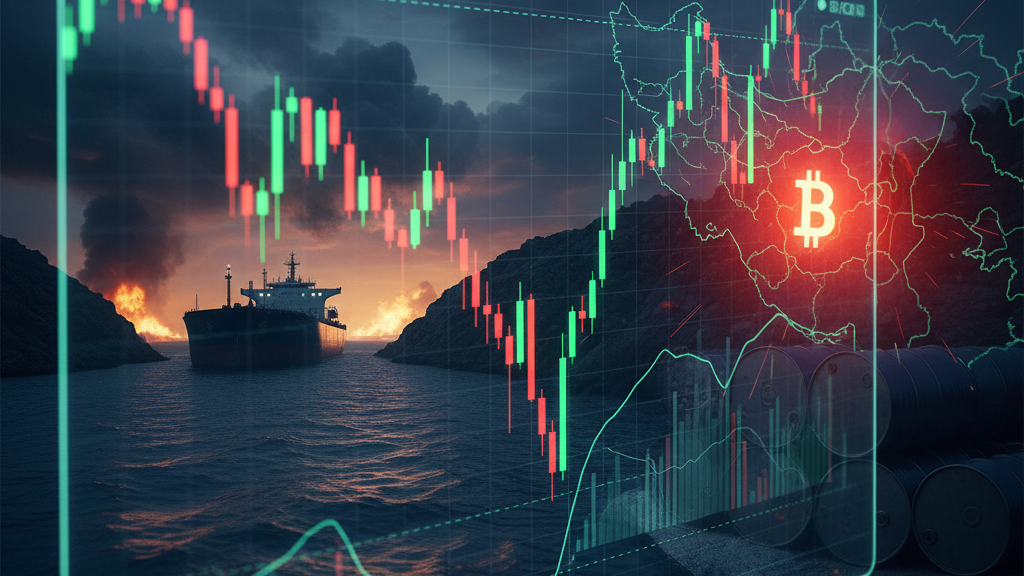
Crypto market fears that Iran could choke off oil supply through the Strait of Hormuz and send financial markets tumbling may be significantly overstated, according to multiple analysts and energy experts. Bitcoin briefly plunged to $63,000 from approximately $65,600 on Saturday, February 28 after Israel and the United States launched coordinated airstrikes targeting Iran's nuclear and missile infrastructure. The leading cryptocurrency rebounded to around $65,000, but anxiety persists across crypto social media about the potential for a broader economic fallout if Tehran retaliates by blocking the world's most critical oil shipping lane.
Weekend Airstrikes Rattled Crypto Markets
Israel and the United States initiated coordinated military strikes on Iran early Saturday, targeting the country's nuclear facilities and missile capabilities after diplomatic negotiations collapsed. Tehran responded by firing ballistic missiles at Israeli territory and U.S. military installations across the region, raising the specter of a full-scale war. Because traditional equity and commodity markets remain closed on weekends, the crypto market became the sole venue for investors to express risk sentiment in real time.
Bitcoin, the largest digital asset by market capitalization, dropped swiftly to $63,000 before bouncing back to roughly $65,000. Oil-linked perpetual futures on decentralized exchange Hyperliquid surged more than 5%, reflecting traders' immediate concerns about possible supply disruptions. The volatility underscored how digital asset markets now function as a barometer for geopolitical risk during periods when legacy finance is shuttered.
Strait of Hormuz: The Oil Chokepoint at the Center of Crypto Fears
The Strait of Hormuz is a narrow maritime passage stretching just 21 miles at its thinnest point, separating Iran to the north from Oman to the south. According to the U.S. Energy Information Administration, the waterway facilitated approximately 20 million barrels of oil shipments each day throughout 2024, making it the single most important oil transit route on the planet. Approximately 20% of all global crude oil passes through this corridor.
Crypto accounts on X have been sounding alarms about the possibility that Iran could shut down the strait entirely. One widely shared post from the account @Crypto_Diet warned that a direct confrontation between Washington and Tehran would constitute a global economic event, predicting oil could spike to $120 to $150 per barrel. The post added that such a move would trigger an inflation shock, broad market sell-offs, a surging dollar, and collapsing emerging-market currencies.
Geopolitical strategist Velina Tchakarova noted that oil prices had already climbed to six-month highs ahead of the strikes. She pointed out that Iran is a founding OPEC member and that the Strait of Hormuz is now directly implicated in the conflict. Some news outlets have reported that several oil majors and trading houses have already suspended shipments through the waterway.
If a direct conflict between the United States and Iran has begun, this isn't just geopolitics. It's a global economic event. If the Strait of Hormuz is threatened, oil could spike toward $120 to $150.
— @Crypto_Diet, Crypto Analyst on X
Could Iran Actually Shut Down the Strait of Hormuz?
The scenario is unlikely, according to energy economists and geopolitical analysts. Iran currently produces 3.3 million barrels per day of crude oil but exports only about half that volume, with nearly all of those shipments going to allied buyer China, according to Daniel Lacalle, a PhD economist, fund manager, and chief economist at Tressis. Lacalle argued that blocking the strait would devastate Iran's own export revenue, effectively punishing Tehran more than its adversaries.
Lacalle emphasized that OPEC member nations maintain enough spare production capacity to rapidly compensate for any Iranian supply disruption. He also stressed that the United States alone is the world's largest oil producer, meaning global supply chains would adjust. Any resulting price surge, he suggested, would prove measured and short-lived rather than catastrophic.
Geography further undermines the blockade scenario. While the strait divides Iranian and Omani waters roughly down the middle, the primary shipping lanes run through the Omani side because the water is deeper and better suited for large tankers. The Iranian side is too shallow for major cargo vessels. Energy market expert Dr. Anas Alhajji stated on X that the strait has never been successfully blocked despite multiple regional wars. He described it as too wide and too well-protected to close.
Hormuz strait has never been blocked despite all wars. It cannot be blocked. Too wide. Well protected.
— Dr. Anas Alhajji, Energy Market Expert
What Does the Iran Conflict Mean for Bitcoin?
Bitcoin remains vulnerable to further downside if the conflict escalates into a full-blown regional war, even if the Strait of Hormuz stays open. Widespread risk aversion across global markets could push the flagship cryptocurrency below the critical $60,000 support level that traders are closely monitoring. Technical chart patterns also point to a potential deepening of bearish momentum amid the Middle East crisis, according to market analysts.
The weekend price action demonstrated that crypto now serves as a real-time proxy for geopolitical risk when traditional markets are offline. With oil-linked derivatives on Hyperliquid and bitcoin spot markets both reacting sharply, digital asset traders should prepare for continued volatility as the situation between Iran, Israel, and the United States evolves in the coming days.
Stay ahead of the market.
Crypto news and analysis delivered every morning. Free.
More from Bitcoinomist
About the Author
Senior Analyst
Kevin Giorgin is an award-winning crypto journalist with over five years of experience covering Bitcoin, DeFi, and blockchain technology at Bitcoinomist.
View all contributors
Follow bitcoinomist.io on Google News to receive the latest news about blockchain, crypto, and web3.
Follow us on Google News