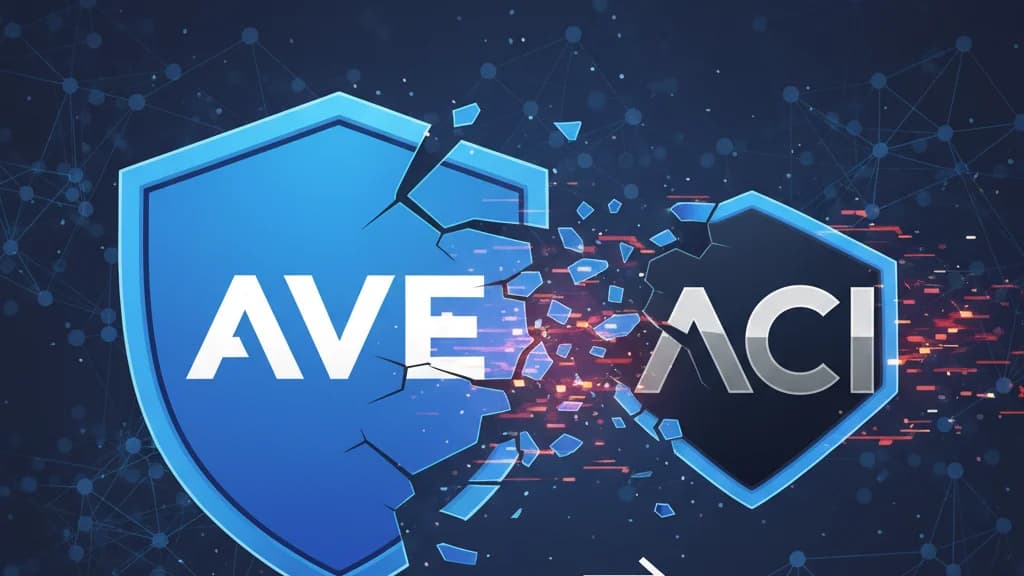
Aave Governance Rift Deepens as Major Group Exits $26B DeFi
What to Know
- $26 billion — The Aave Chan Initiative, a leading governance participant, is shutting down and leaving the Aave protocol over transparency concerns
- $51 million — The dispute centers on a record budget proposal from Aave Labs that passed its first vote with just 52% approval amid self-voting allegations
- 11% — Aave's governance token AAVE plunged more than 11% in 24 hours following ACI's departure announcement, falling to $110
- 61% — ACI claims it drove 61% of all governance actions over three years at a cost of just $4.6 million to the DAO
The Aave governance rift within one of decentralized finance's largest protocols intensified on March 3 after the Aave Chan Initiative, among the most active governance contributors inside the Aave DAO, declared it would shut down. The eight-person team led by founder Marc Zeller confirmed it will not seek renewal of its DAO contract, opting for a four-month wind-down during which it will continue participating in votes while handing off infrastructure and open-sourcing its tools.
ACI Announces Shutdown After Budget Dispute
The Aave Chan Initiative published a post-mortem on the governance forum explaining its decision to leave the protocol. The group cited unresolved concerns about transparency and voting power related to a record-setting budget request submitted by Aave Labs. Zeller wrote that the organization requested four specific conditions before supporting the proposal, including stricter onchain milestone tracking and limits on self-voting by addresses linked to the budget recipient. None of those conditions were addressed, according to the post-mortem.
The departure follows closely on the heels of BGD Labs, the team responsible for building and maintaining Aave's V3 codebase, which announced it too would step away over organizational and strategic disagreements with Aave Labs. The back-to-back exits mark a significant turning point for the protocol, which commands nearly $27 billion in total value locked across 20 blockchains and holds a DeFi market share above 65%, according to ACI's published figures.
Why Did ACI Leave the Aave Governance Process?
The conflict traces directly to a budget proposal from Aave Labs titled "Aave Will Win." The plan sought DAO approval for up to approximately $51 million in stablecoins and 75,000 AAVE tokens to fund product development, marketing, and expansion tied to Aave V4. It also proposed directing all revenue from Aave-branded products to the DAO. The Aave Will Win proposal cleared its first formal vote over the weekend with roughly 52% in favor.
ACI alleged that wallet addresses connected to Aave Labs participated in the vote, effectively tipping the outcome in the proposer's favor without adequate disclosure. In its post-mortem, the group stated there is "no role for an independent service provider" if the largest budget recipient can influence its own approval process. Aave Labs has not yet issued a public response to the allegations or ACI's departure.
The episode underscores a persistent tension in DAO governance: voting power frequently concentrates among founders, early investors, and large delegates, making truly independent oversight difficult to sustain.
There is no role for an independent service provider if the largest budget recipient can influence its own approval without full disclosure.
— Aave Chan Initiative, Governance Post-Mortem
AAVE Token Drops and Market Reaction
The governance turmoil sent AAVE sliding sharply in the market. The token fell more than 11% in the last 24 hours following ACI's exit announcement, dropping to trade at roughly $110. Over the past year, AAVE has declined more than 44%, significantly underperforming Bitcoin, which shed approximately 24% over the same period.
Despite the upheaval, ACI's track record underscores its outsize role in Aave's governance ecosystem. The group claims it drove 61% of all governance actions over the past three years and helped deploy $101 million in incentive programs. During that period, Aave's GHO stablecoin grew from $35 million to $527 million in circulating supply. The team operated at a total cost of $4.6 million to the DAO across its three-year mandate.
ACI Wind-Down Plan and Infrastructure Handoff
To settle its remaining obligations, ACI will submit a direct proposal to cancel its GHO funding stream and transfer 120 days of funding to its treasury address, with the remainder returning to the DAO. The group stated it chose a lump-sum approach because it does not trust the governance process to maintain its stream during the transition. After the proposal executes, ACI will also sever its own AAVE vesting stream.
Over the next four months, the team plans to hand off or open-source the systems it built, including governance dashboards, incentive frameworks, and delegate coordination programs. ACI will also step down from committee roles on the Aave Liquidity Committee and GHO Stewards at the end of the wind-down period.
What Does This Mean for Aave Users Going Forward?
For everyday Aave users, lending and borrowing operations will continue without disruption. Smart contracts remain live on all supported networks, and other service providers including Chaos Labs, TokenLogic, and Certora continue their roles within the ecosystem. However, the loss of two major contributors in rapid succession raises questions about how the DAO will manage risk, allocate budgets, and coordinate future protocol upgrades.
The decentralization debate inside Aave began intensifying when the DAO started questioning who controls the protocol's interface and who benefits financially from it. The coming months will test whether Aave's remaining contributors and token holders can fill the gap left by ACI and BGD Labs while preserving the governance integrity that decentralized protocols promise.
Stay ahead of the market.
Crypto news and analysis delivered every morning. Free.
More from Bitcoinomist
About the Author
Senior Crypto Journalist
Kevin Giorgin is a senior crypto journalist with over five years of experience covering Bitcoin, DeFi, and blockchain technology at Bitcoinomist.
View all contributors
Follow bitcoinomist.io on Google News to receive the latest news about blockchain, crypto, and web3.
Follow us on Google News