Satlantis: Bitcoin-Native Luma Alternative for Real Events
What to Know
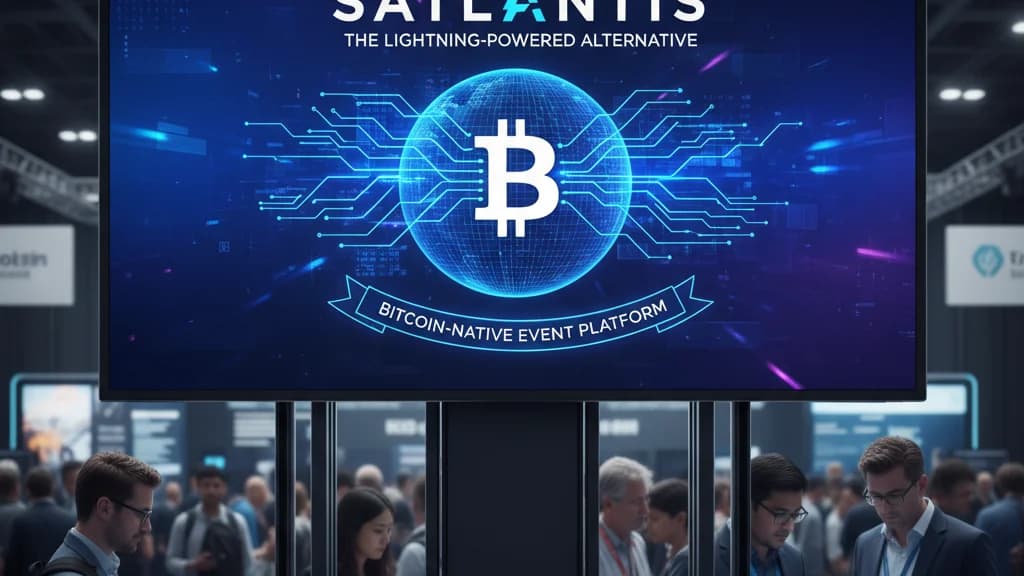
- Satlantis is a Bitcoin-native event platform positioning itself as a direct alternative to Luma for discovering and hosting real-world gatherings
- The platform charges only 2% on ticket sales, compared to competitors that charge up to 10%, while supporting both bitcoin and fiat payments
- Every user receives a built-in Lightning Network wallet capped at 1 million satoshis to minimize custodial risk and keep transactions fast
- Deep Nostr integration means event hosts automatically gain social followers they can migrate to other Bitcoin-native apps like Primal
Satlantis, a Bitcoin-native event organizing platform, has emerged as a direct rival to Luma — the popular event page reportedly holding an exclusive arrangement with the Solana blockchain. Built on Bitcoin's founding ethos and powered by the Lightning Network and Nostr protocol, Satlantis is designed for what its creators call "real-world maxxing": the growing cultural movement away from algorithmically curated feeds and toward genuine, in-person social experiences.
What Is Satlantis and How Does It Differ from Luma?
Satlantis is an all-in-one event management platform that lets hosts create, customize, and share events through a permanent link — with built-in ticketing, a customer relationship management suite, and a native bitcoin wallet. Unlike Luma, which operates within the broader social media and fintech ecosystem, Satlantis anchors every feature to Bitcoin, from wallet-based payments to its integration with the censorship-resistant Nostr social protocol. You will find no memecoins here; the platform's stated mission is to get users off their screens and into shared spaces.
Jordi Llonch, Head of Growth at Satlantis, said in an exclusive interview that the app is "a tool to promote commerce in real life," adding that "AI has broken the internet, people are tired of online everything, people want events in real life." That framing reflects a broader shift visible in social media engagement data: usage peaked in 2022, the year pandemic-era digital saturation began to visibly recede, and the desire for offline community has been accelerating since.
AI has broken the internet, people are tired of online everything, people want events in real life.
— Jordi Llonch, Head of Growth at Satlantis
CRM Tools, Ticketing, and the Nostr Backbone
At its core, Satlantis functions as an event discovery and hosting layer. Hosts can upload a CSV of names, emails, and Nostr public keys to mass-notify their contacts about upcoming events, target attendees of past gatherings, or reach users who have confirmed attendance or are still undecided. Emails go out from the Satlantis domain, sidestepping spam filters that frequently block event notifications from third-party senders.
The Nostr integration runs deeper than a login option. When a host creates an event calendar on Satlantis, attendees automatically follow that host's Nostr account — generating a portable social graph that users can carry to other Bitcoin-native apps such as Primal. Users can authenticate with existing Nostr keys or through standard Google, Apple, or email accounts, making the onboarding friction low for newcomers while preserving data sovereignty for seasoned Bitcoiners.
On the financial side, hosts can sell tickets for bitcoin or local fiat currencies. A one-click Stripe integration handles fiat payments, which matters for large-scale events like Bitcoin conferences that attract participants unfamiliar with self-custody wallets. Hosts can also create tiered ticket types — standard, VIP, or free — and send targeted messages to each group via the built-in CRM.
Lightning Wallet Architecture and Fee Structure
The Satlantis mobile app includes a fully custodial Lightning Network wallet available to every user by default. Each account receives a Lightning URL address — formatted as username@satlantis.io — enabling frictionless peer-to-peer payment for tickets, tips, and event revenue. Satlantis deliberately caps wallet balances at 1 million satoshis, a design decision intended to limit the platform's custodial exposure while encouraging users to withdraw to personal wallets regularly. Users can withdraw at any time with no restrictions.
Venue owners benefit from the same wallet infrastructure: every listed venue on the platform receives its own bitcoin wallet that attendees can tip directly, creating a financial incentive for venue operators to claim their Satlantis accounts and enter the Bitcoin economy. A verification system is under active development — likely relying on Google Maps integration — to ensure only legitimate venue owners can claim those wallets.
The Lightning Network wallet's exclusive reliance on Bitcoin's layer-two protocol keeps transaction confirmations fast and fees minimal. On the ticket sales side, Satlantis charges a flat 2% processing fee — well below the up to 10% charged by competing platforms. Stripe adds another 2.9% on top for fiat transactions, though that remains standard across the industry. Hosts who accept bitcoin directly face only the 2% platform fee with no additional processor cost.
What Does This Mean for Bitcoin Circular Economies?
Satlantis represents a meaningful expansion of the Bitcoin circular economy into the event and hospitality sector. By embedding a Lightning wallet into every user account by default — not as an opt-in feature — the platform normalizes bitcoin payments at the point of social gathering, precisely where new participants are most likely to encounter the technology for the first time.
Hosts can sweeten the deal further by enabling fiat ticketing while offering 20% of the ticket value back in satoshis to attendees — a sats-back mechanic that converts first-time event buyers into first-time bitcoin holders. Llonch has announced a webinar to demonstrate Satlantis's full feature set, giving interested event organizers a live walkthrough before committing to the platform. As social media usage stagnates and AI-generated content erodes trust in digital spaces, purpose-built tools like Satlantis may find a growing audience among communities that already value sound money and face-to-face interaction.
Related Articles
Stay ahead of the market.
Crypto news and analysis delivered every morning. Free.
More from Bitcoinomist
About the Author
Senior Crypto Journalist
Kevin Giorgin is a senior crypto journalist with over five years of experience covering Bitcoin, DeFi, and blockchain technology at Bitcoinomist.
View all contributors
Follow bitcoinomist.io on Google News to receive the latest news about blockchain, crypto, and web3.
Follow us on Google News