Anthropic Reopens Pentagon Talks as Tech Groups Push Trump
What to Know
- $200 million — Anthropic's existing Pentagon contract hangs in the balance as new negotiations resume with the Department of Defense
- Defense Secretary Pete Hegseth warned that Anthropic could be designated a supply chain risk, freezing the firm out of military procurement
- Talks collapsed last week over a clause restricting bulk data analysis, which Anthropic says guards against mass domestic surveillance
- Major tech trade groups sent a Wednesday letter to President Trump arguing the risk label could undermine US leadership in AI
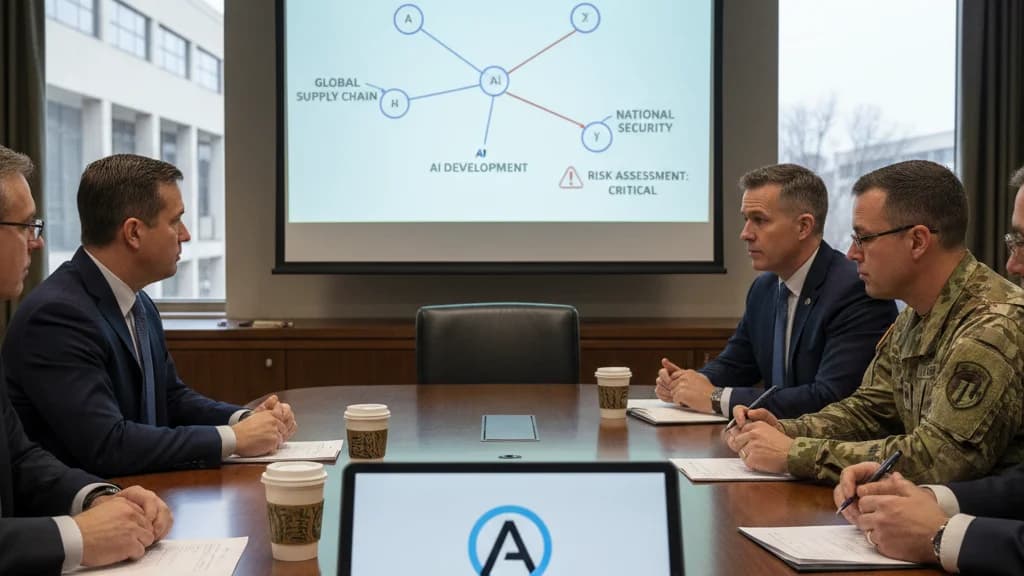
Anthropic has reopened high-stakes negotiations with the Pentagon after talks over military use of the company's artificial intelligence models broke down last week, according to the Financial Times. CEO Dario Amodei is now in direct discussions with Emil Michael, the US undersecretary of defense for research and engineering, seeking to finalize terms that would preserve the AI developer's access to lucrative defense contracts and avert a damaging supply chain risk designation from the Trump administration.
Why Could Anthropic Lose Pentagon Access?
The dispute stems from a breakdown in contract language governing how the US military may deploy Anthropic technology. According to the Financial Times, the Pentagon offered to accept the company's broader usage terms on the condition that Anthropic remove a clause restricting the "analysis of bulk acquired data." Amodei told staff in an internal memo that this provision was designed to prevent potential mass domestic surveillance, a scenario the company treats as a firm red line alongside the deployment of AI in lethal autonomous weapons.
Negotiations fell apart last week after Emil Michael reportedly called Amodei a "liar" with a "God complex," according to people familiar with the matter. The two sides were unable to reach consensus on the safeguard language Anthropic insisted was essential to preventing misuse of its models.
Supply Chain Risk Threat Escalates
The confrontation intensified after Defense Secretary Pete Hegseth warned that Anthropic could receive a formal Pentagon supply chain risk designation. Such a label would effectively bar all contractors within the defense procurement network from doing business with the AI developer, cutting off a critical revenue stream and signaling broader government distrust.
The threat carries particular weight given Anthropic's deep existing ties to the defense sector. The company secured a contract valued at up to $200 million from the US Department of Defense in July 2025 and became the first AI provider whose models were deployed in classified environments and by national security agencies. The US military even used Anthropic's Claude AI model to assist with a major air strike on Iran shortly after President Donald Trump ordered federal agencies to stop using the company's systems, according to earlier reporting.
Tech Industry Rallies Behind Anthropic
A coalition of influential technology trade organizations intervened on Wednesday, sending a letter to President Trump cautioning that branding a domestic AI company as a supply chain risk could severely damage American competitiveness. The tech groups letter Trump signatories argued that treating a US technology firm "as a foreign adversary, rather than an asset" would discourage innovation and weaken the nation's ability to compete with China in the global AI race.
The letter was signed by the Software & Information Industry Association, TechNet, the Computer & Communications Industry Association, and the Business Software Alliance. These organizations collectively represent hundreds of American technology companies, including AI chipmaker Nvidia, Alphabet's Google, and Apple.
What This Means Going Forward
The outcome of these renewed talks will likely set a precedent for how the US government negotiates AI usage terms with private-sector developers. If Anthropic and the Pentagon reach an agreement, it could establish a framework balancing national security needs with ethical guardrails on military AI deployment. A failure to reach terms, however, would mark the first time a major American AI firm is effectively blacklisted from defense work over safety policy disagreements, potentially chilling the willingness of other AI companies to impose usage restrictions on government clients.
Stay ahead of the market.
Crypto news and analysis delivered every morning. Free.
More from Bitcoinomist
About the Author
Senior Crypto Journalist
Kevin Giorgin is a senior crypto journalist with over five years of experience covering Bitcoin, DeFi, and blockchain technology at Bitcoinomist.
View all contributors
Follow bitcoinomist.io on Google News to receive the latest news about blockchain, crypto, and web3.
Follow us on Google News