Bitcoin Bear Market Could End Once Bulls Reclaim $74.5K
What to Know
- $74,500 is the realized price for Bitcoin holders who bought six months to two years ago, making it a key profitability threshold
- $62,400 was the weekly low before BTC bounced 7.45% over two days, reclaiming the 18-to-24-month cost basis near $64,200
- The MVRV ratio for this cohort sits at 0.88, meaning the group is on average holding at a loss
- Long-term holder supply has recovered to 13.96 million BTC, signaling continued coin dormancy despite recent volatility
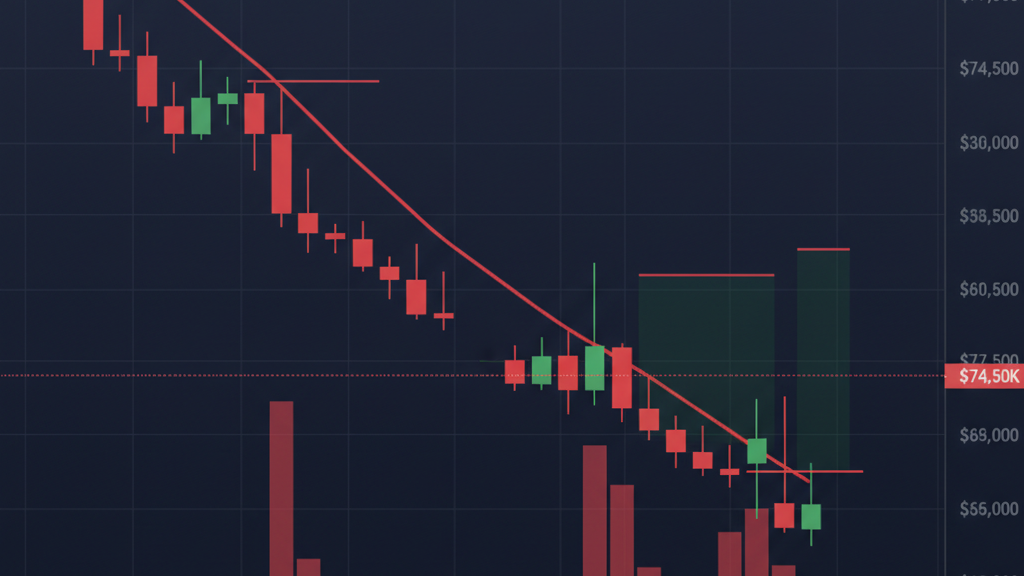
Bitcoin's bear market could be approaching a turning point, according to on-chain data analyzed this week. After plunging to $62,400 on Tuesday, BTC staged a 7.45% recovery over two days, yet the asset still trades below the average cost basis of $74,500 for holders who purchased between six months and two years ago. Reclaiming that threshold may signal a decisive shift in market structure.
On-Chain Cost Basis Levels Serve as Key Pivot Zones
Bitcoin's realized price tracks the average on-chain acquisition cost for a specific UTXO age band. For coins aged 18 to 24 months, that metric currently sits near $64,200, according to on-chain analytics. Crypto analyst Anil highlighted that BTC tested this level and managed to reclaim it by Tuesday's daily close, preserving the support zone for now. Cost basis thresholds function as psychological pivot points for investors across the market.
When prices fall below these realized price levels, investors face unrealized losses and the likelihood of distribution rises significantly. Conversely, a sustained position above the band tends to alleviate investor stress and foster renewed accumulation behavior. The $64,200 level currently represents the lower boundary of a critical support region that bulls need to defend in order to maintain any near-term recovery momentum.
Why Is $74,500 the Most Important Level for Bitcoin Bulls?
The $74,500 price represents the realized price for Bitcoin UTXOs aged between six months and two years, capturing investors from the prior cycle's consolidation and breakout phases. This cohort's MVRV ratio, which compares market value to realized value, currently sits at 0.88. A reading below 1 indicates that this group is, on average, holding at a loss, according to on-chain data.
As Bitcoin fell beneath $74,500, investors who acquired coins during the past six months to two years shifted into unrealized loss territory, transforming that price into a crucial profitability threshold. A sustained move back above $74,500 would place much of this cohort back into aggregate profit, which could ease sell-side pressure from holders looking to exit near their breakeven point.
Long-Term Holder Supply Shows Resilience
On-chain supply data from CryptoQuant reveals that the long-term holder balance has climbed back to approximately 13.96 million BTC, close to the 14 million mark, after dropping to a multi-year low on November 21, 2025. This recovery in aged supply indicates continued coin dormancy despite the recent bout of volatility, suggesting that long-term conviction remains intact among seasoned holders.
If investors who purchased during the six-month to two-year window choose to hold rather than sell near their average entry, the supply sitting between $74,500 and $100,000 could thin out more rapidly. A sustained rally above $74,500 would push a large portion of these coins back into profit, potentially redirecting market focus toward liquidity near the $100,000 level.
Realized Cap Signals Show Slowing Capital Inflows
An uptick in Bitcoin's realized cap, which measures the aggregate value of coins based on their last on-chain movement price, may also confirm a broader trend shift. The metric currently holds near cycle highs, though its rate of expansion has decelerated notably. The realized cap net position change has compressed toward neutral, near 0%, indicating that capital inflows are presently negligible.
While the realized cap remains close to all-time highs, it has begun trending lower, pointing to a slowing pace of new capital entering at elevated cost basis levels. Historically, late bitcoin bear market phases tend to exhibit flat or contracting realized cap readings, while early recoveries begin with stabilization before acceleration. A renewed expansion in the net position change back toward the 2% to 4% range would provide clearer confirmation that fresh capital is reentering and accumulation is on the rise.
What Does This Mean for the Bitcoin Bear Market?
The confluence of on-chain indicators suggests that Bitcoin's current bear market phase may be entering its final stages. The $74,500 realized price level stands as the most critical threshold, with its reclamation potentially marking the transition from distribution to accumulation. Investors and traders should watch the MVRV ratio and realized cap net position change for early signals of a definitive trend reversal.
Stay ahead of the market.
Crypto news and analysis delivered every morning. Free.
More from Bitcoinomist
About the Author
Senior Analyst
Kevin covers crypto markets, macro trends, and on-chain data at Bitcoinomist. Former derivatives trader with 8+ years in digital assets.
View all contributors
Follow bitcoinomist.io on Google News to receive the latest news about blockchain, crypto, and web3.
Follow us on Google News