US Dollar Index at 3-Month High: Is It Good or Bad for BTC?
What to Know
- $68,000 -- Bitcoin held this support level on Tuesday despite broad weakness in equities and gold
- $1.5 billion in net inflows poured into Bitcoin ETFs over the seven days since February 24
- 69% -- the 30-day BTC-Nasdaq 100 correlation dropped sharply from 92%, signaling a decoupling trend
- Traders await a decisive move above $75,000 before declaring the bear market over
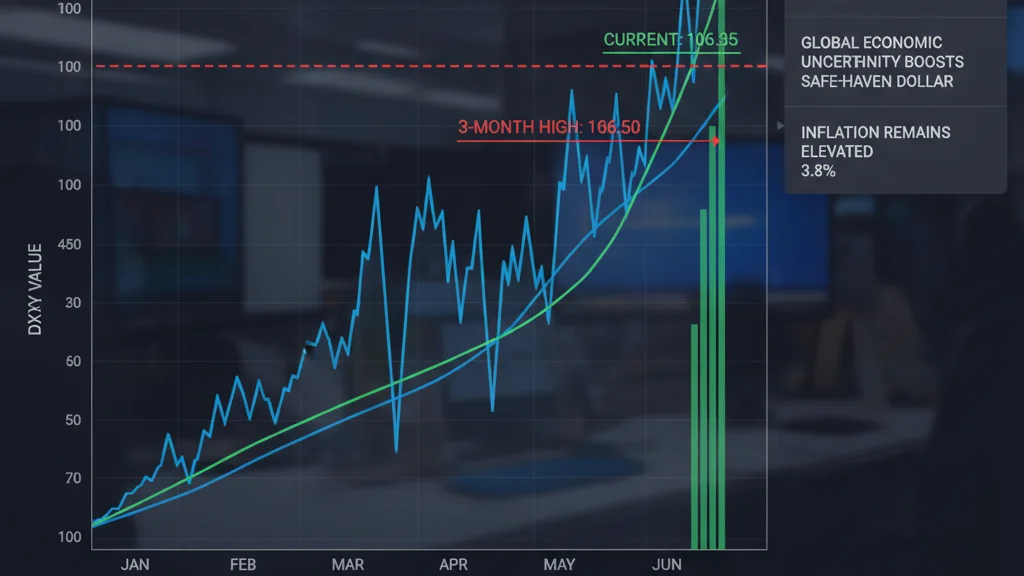
The US Dollar Index surged to 99.4 on Tuesday, approaching a three-month peak and reigniting debate over whether dollar strength spells trouble for Bitcoin. Despite this macro headwind, BTC held firm above $68,000 even as the Nasdaq 100 slipped 1% and gold tumbled 3.6%, suggesting the leading cryptocurrency may be charting its own course independent of traditional risk assets. The United States also faces growing geopolitical risk from a prolonged confrontation with Iran, adding another layer of uncertainty for global investors.
Dollar Strength Reaches Near 3-Month Peak
The US Dollar Index climbed to 99.4 on Tuesday from 96.6 just three weeks earlier, according to market data. This rapid appreciation is largely attributed to investors rotating into cash and government bonds, behavior consistent with a risk-off environment. Such periods of DXY strength have traditionally coincided with softness in risk assets, including cryptocurrencies.
However, a broader perspective reveals the dollar remains well below the 105-110 corridor it occupied between November 2024 and March 2025. Over the past twelve months, the DXY has exhibited consolidation rather than sustained appreciation, indicating the current move may not carry the same bearish weight for digital assets that some market participants fear. Periods of DXY weakness have generally favored Bitcoin, such as the bull run that took place from March 2025 through August 2025.
Is a Rising US Dollar Index Bad for Bitcoin?
A strengthening dollar does not automatically signal a Bitcoin sell-off. Although periods of DXY weakness have historically aligned with positive BTC returns, the correlation is far from absolute. Bitcoin's identity has shifted over time, functioning variously as a decentralized monetary system, a digital store of value, an immutable onchain ledger, and a high-beta speculative asset. Predicting a crash based solely on dollar appreciation therefore appears unjustified.
The 30-day rolling correlation between Bitcoin and the Nasdaq 100 dropped to 69% after reaching 92% just one week prior, according to analysts. This decoupling is particularly notable given that the Nasdaq 100 was trading only 6% below its all-time high at the time, suggesting Bitcoin is increasingly responding to its own supply-and-demand dynamics rather than mirroring equity market moves.
Bitcoin's recent decoupling from equities suggests the cryptocurrency is charting its own path, regardless of what the US Dollar Index does in the near term.
— Market Analysts
Miner Liquidation Fears and Sentiment Headwinds
An undeniable lack of bullish momentum persists across the market, driven by multiple factors including the October 10, 2025 flash crash, quantum computing concerns, disappointment with progress on a US Strategic Bitcoin Reserve, and a broader rotation of investor attention toward artificial intelligence. Traders continue searching for a specific catalyst behind the slide toward $60,000, which only amplifies prevailing fear and uncertainty.
A recent SEC filing from MARA Holdings (MARA US) triggered fears that the company might follow other publicly listed miners -- such as Cango (CANG US), Bitdeer (BTDR US), and Core Scientific (CORZ US) -- in liquidating their full Bitcoin reserves. Robert Samuels, MARA Vice President of Investor Relations, denied these rumors in a statement, clarifying that while the company "may buy or sell from time to time," there is no plan to offload the majority of its holdings. Market participants may have reacted impulsively before this clarification, partly because Bitcoin's prolonged bear market has coincided with rival miners pivoting their core operations toward AI data centers.
Institutional Demand Signals Confidence
Institutional appetite for Bitcoin remains robust despite the stronger dollar. Bitcoin ETF inflows totaled $1.5 billion in net terms over the seven days since February 24, signaling that large-scale investors continue to accumulate the asset even amid a risk-off macro environment. This level of sustained capital inflow serves as a clear indicator that institutional conviction has not wavered.
Gold, meanwhile, showed signs of exhaustion by retesting $5,000 support following a 25% year-to-date rally in 2026. Bitcoin's ability to hold steady while gold retreats may indicate a shift in how institutional allocators view the cryptocurrency relative to traditional safe-haven assets.
What Comes Next for Bitcoin Price?
Bitcoin holders face a challenging road to full confidence after a 52% contraction from the all-time high, though overall sentiment is beginning to improve. Traders will likely wait for a decisive breakout above $75,000 before concluding that the bear market has ended. Relative dollar strength should not be treated as an automatic sell signal, especially while the cryptocurrency demonstrates resilience against declining equities and gold.
Until that threshold is met, data points like the US Dollar Index will continue to weigh on sentiment, though the currently weak correlation limits their predictive value. The combination of strong ETF inflows, a decoupling from equities, and a fatigued gold market may ultimately prove more important than short-term dollar strength for determining Bitcoin's next major move.
Stay ahead of the market.
Crypto news and analysis delivered every morning. Free.
More from Bitcoinomist
About the Author
Senior Crypto Journalist
Kevin Giorgin is a senior crypto journalist with over five years of experience covering Bitcoin, DeFi, and blockchain technology at Bitcoinomist.
View all contributors
Follow bitcoinomist.io on Google News to receive the latest news about blockchain, crypto, and web3.
Follow us on Google News