$1B Into Bitcoin ETFs, Yet Price Stalls — Analyst Explains
What to Know
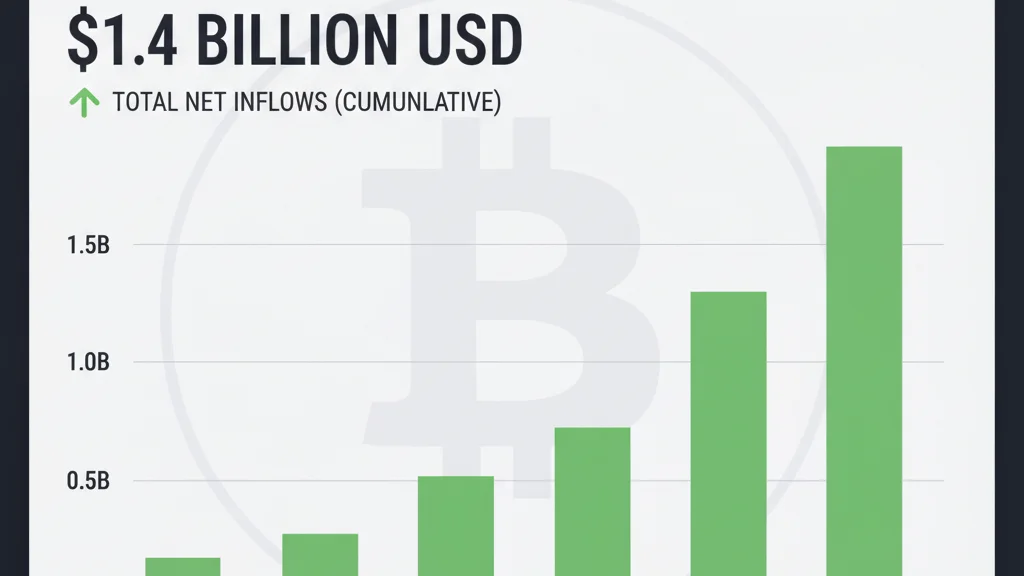
- $1.4 billion in fresh capital flowed into U.S. spot Bitcoin ETFs over the past five trading days without lifting the price
- $55 billion in cumulative inflows have entered the 11 U.S.-listed spot Bitcoin ETFs since their January 2024 debut
- Authorized participants often short-sell ETF shares before purchasing actual BTC, creating a timing lag that mutes bullish pressure
- Bitcoin briefly touched the top of its range near $67,000 on Tuesday before sellers pushed it back down
Bitcoin ETF inflows totaling $1.4 billion over the past five days have failed to move BTC's spot price, which remains stuck near $67,000 as of March 4, 2026. Analysts at the cryptocurrency exchange Bitfinex say the disconnect stems from the structural mechanics of how exchange-traded funds actually purchase the underlying asset — a process that introduces meaningful delays between new capital arriving and real buying hitting the open market.
Why Aren't Bitcoin ETF Inflows Lifting the Price?
The short answer is timing. When demand for a bitcoin ETF surges, its market price can drift above the fund's net asset value. Authorized participants — large banks, market makers, and broker-dealers — step in to close that gap by creating new shares. But rather than buying BTC on the spot market first, APs frequently short-sell new shares immediately and defer the underlying purchase for hours or until the next business day.
By the time those delayed spot-market acquisitions execute, other sellers have often absorbed the buying pressure. The net result, according to Bitfinex analysts, is that the fund grows while the price barely moves — leaving investors puzzled by the gap between record inflows and a stagnant chart.
The result is that the ETF grows, but the actual BTC price doesn't rise because there has been no buying in the spot market. This can make the BTC price feel 'stuck' or suppressed.
— Bitfinex Analysts, in an email to reporters
How Authorized Participants Create the Lag
An exchange-traded fund is a pooled investment vehicle that holds assets such as Bitcoin and issues tradable shares on a stock exchange. A total of 11 spot Bitcoin ETFs debuted in the United States in January 2024, and these vehicles have collectively attracted more than $55 billion in cumulative net inflows since inception.
Regulators grant APs a special exemption: they can short-sell ETF shares almost immediately and settle the corresponding Bitcoin purchase later, typically by the next business day depending on whether creations are handled in cash or in-kind. This keeps the ETF's market price aligned with its net asset value, but it also means a spike in ETF demand does not translate into instant buying pressure on Bitcoin's spot price.
Broader Market Headwinds Compound the Effect
The lag does not operate in isolation. Escalating geopolitical tensions and surging oil prices have weighed on risk assets globally, adding downward pressure on Bitcoin. The largest cryptocurrency briefly reclaimed the top of its trading range on Tuesday before sellers pushed it back to roughly $67,000, while South Korean equities posted their worst two-day decline since 2008.
Bitfinex analysts cautioned that during periods of severe market dislocation, the gap between ETF demand and real BTC spot buying can produce short windows of market mispricing — a dynamic amplified when macro headwinds converge with the structural delay inherent in ETF share creation.
What This Means Going Forward
Investors interpreting ETF inflows as a straightforward bullish signal may need to recalibrate. The $1.4 billion that entered spot Bitcoin ETFs over five days reflects genuine demand for BTC exposure, but the translation of that demand into upward price pressure is neither instant nor guaranteed. Until authorized participants settle their short positions with actual purchases, the flow data overstates the immediate market impact.
In a macro environment burdened by geopolitical risk and commodity-price volatility, even large inflows may struggle to overcome persistent selling pressure — a dynamic that could keep Bitcoin range-bound until conditions improve.
Stay ahead of the market.
Crypto news and analysis delivered every morning. Free.
More from Bitcoinomist
About the Author
Senior Crypto Journalist
Kevin Giorgin is a senior crypto journalist with over five years of experience covering Bitcoin, DeFi, and blockchain technology at Bitcoinomist.
View all contributors
Follow bitcoinomist.io on Google News to receive the latest news about blockchain, crypto, and web3.
Follow us on Google News